Modern commercial buildings use electricity very differently than they did just a few decades ago. Computers, LED lighting, electronic controls, variable-speed motors, and automated equipment have become standard in offices, warehouses, manufacturing facilities, and retail properties.
While these technologies offer significant advantages, some can introduce electrical disturbances that weren’t as common in older commercial electrical systems.
One of those disturbances is known as electrical harmonics.
For businesses searching for Eric Gandler Clifton Park commercial electrical services, Development Electric provides electrical troubleshooting, maintenance, and system upgrades throughout Clifton Park and the Capital Region.
What Are Electrical Harmonics?
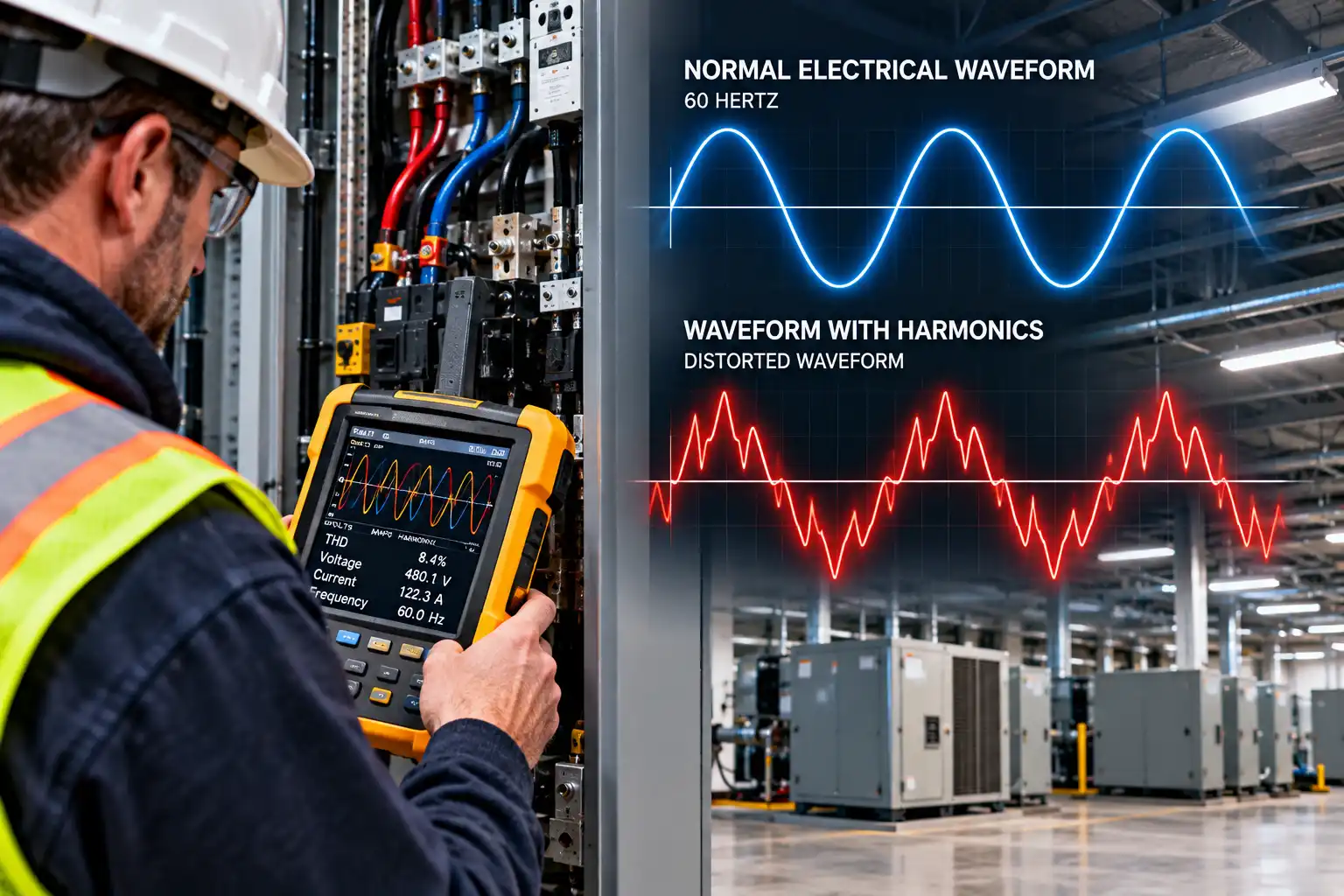
Electricity supplied to commercial buildings normally operates at a frequency of 60 hertz in the United States.
Ideally, the voltage and current waveforms follow a smooth, repeating pattern.
However, certain electronic devices draw current in ways that distort the normal waveform. This distortion can introduce additional frequency components called harmonics.
Electrical harmonics aren’t necessarily an indication that something is wrong. They’re a common characteristic of many modern electrical loads.
However, excessive harmonic distortion can sometimes contribute to electrical performance problems.
What Equipment Can Produce Harmonics?
Many commercial buildings contain equipment that can introduce harmonic currents into the electrical system.
Common examples include:
- Variable-frequency drives used with motors
- Computers and servers
- LED lighting drivers
- Uninterruptible power supplies
- Industrial electronic controls
- Battery charging equipment
- Certain commercial power supplies
- Electronic manufacturing equipment
The amount of harmonic distortion depends on the equipment, its design, and how it interacts with the electrical system.
Why Can Harmonics Become a Problem?
Commercial electrical systems are designed to operate within certain electrical conditions.
When harmonic distortion becomes excessive, it can contribute to problems involving electrical equipment and distribution systems.
Depending on the installation, potential concerns include:
- Additional heating in transformers
- Increased neutral conductor currents
- Reduced electrical efficiency
- Equipment performance problems
- Additional stress on certain electrical components
- Interference with sensitive equipment
- Nuisance operation of some protective devices
These symptoms can have many possible causes, so harmonic distortion shouldn’t automatically be assumed to be responsible.
Why Are Modern Commercial Buildings More Susceptible?
Older commercial electrical systems often supplied relatively straightforward loads such as incandescent lighting, resistance heating, and conventional motors.
Today’s buildings contain significantly more electronic equipment.
An office may have hundreds of computers and LED fixtures. A warehouse may operate numerous variable-frequency drives. A manufacturing facility may rely on electronic motor controls and automated production equipment.
Individually, each device may operate normally.
However, the combined effect of many nonlinear electrical loads can make harmonic distortion an important consideration in some facilities.
Variable-Frequency Drives Deserve Attention
Variable-frequency drives, often called VFDs, are commonly used to control motor speed.
They’re found in commercial HVAC systems, pumps, fans, conveyors, and industrial machinery.
VFDs can improve motor control and reduce energy consumption in appropriate applications.
However, certain VFD designs also produce harmonic currents.
When a facility operates numerous large drives, electrical engineers and qualified electrical professionals may need to evaluate their combined impact on the distribution system.
Depending on the installation, harmonic mitigation equipment or other design improvements may be appropriate.
Can Harmonics Affect Electrical Transformers?
Transformers are designed to operate within specific electrical and thermal limits.
Harmonic currents can create additional losses and heating in some transformers.
This becomes particularly important in commercial facilities with substantial nonlinear electrical loads.
When planning electrical upgrades or installing equipment that produces significant harmonic currents, transformer suitability may need to be evaluated.
A transformer that has sufficient capacity based on ordinary load calculations may still require additional consideration when substantial harmonic distortion is present.
Electrical Harmonics Aren’t Always Obvious
Unlike a burned-out light or tripped breaker, harmonic distortion isn’t something a business owner can easily identify by looking at electrical equipment.
A facility may operate for years without obvious problems.
In other situations, unexplained overheating, equipment malfunctions, or electrical performance issues may prompt further investigation.
Qualified professionals can use power-quality analyzers and other appropriate testing equipment to measure harmonic distortion and evaluate electrical conditions.
These measurements can help determine whether harmonics are contributing to a particular problem.
What Can Be Done About Excessive Harmonics?
If testing identifies harmonic distortion as a concern, several potential solutions may be considered.
Depending on the electrical system, these can include:
- Harmonic filters
- Line reactors
- Equipment with lower harmonic emissions
- Changes to electrical distribution
- Appropriately selected transformers
- Other power-quality improvements
There isn’t one universal solution.
The appropriate approach depends on the equipment, electrical system, measured conditions, and applicable engineering requirements.
Consider Power Quality Before Major Equipment Upgrades
Businesses planning to install significant amounts of electronic equipment should consider the impact on their electrical infrastructure.
For example, a manufacturing facility adding multiple variable-frequency drives may have different electrical considerations than an office adding a few computers.
Evaluating electrical requirements before equipment installation can help identify potential concerns early.
This is especially important for facilities where unexpected downtime can interrupt production or other critical operations.
Eric Gandler Clifton Park Commercial Electrical Services
Electrical harmonics are one example of how modern technology can introduce new considerations for commercial electrical systems.
As businesses add electronic equipment, machinery, automation, and advanced controls, understanding the condition and capabilities of existing electrical infrastructure becomes increasingly important.
Businesses searching for Eric Gandler Clifton Park commercial electrical services can turn to Development Electric for more than 25 years of commercial and industrial electrical experience.
Eric Gandler Development Electric provides commercial electrical troubleshooting, preventative maintenance, equipment connections, power distribution, panel and service upgrades, electrical installations, and system improvements throughout Clifton Park and the Capital Region.
Whether your business is expanding its operations, adding industrial equipment, or experiencing unexplained electrical problems, professional electrical evaluation can help determine the appropriate next steps.
Need commercial electrical services in Clifton Park? Call Eric Gandler Development Electric at 518-365-1583 to discuss your facility’s electrical needs.